
Last updated November 4, 2026
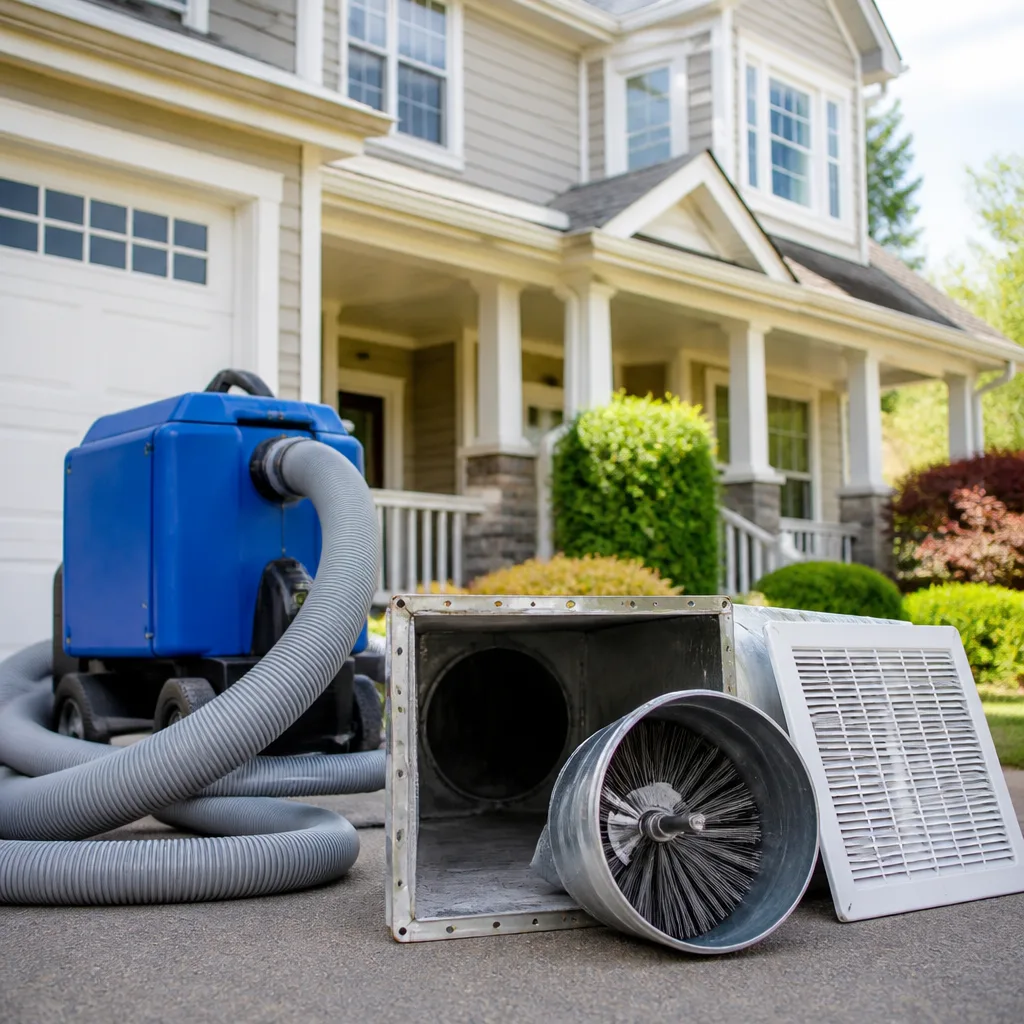 Whole-home duct cleaning
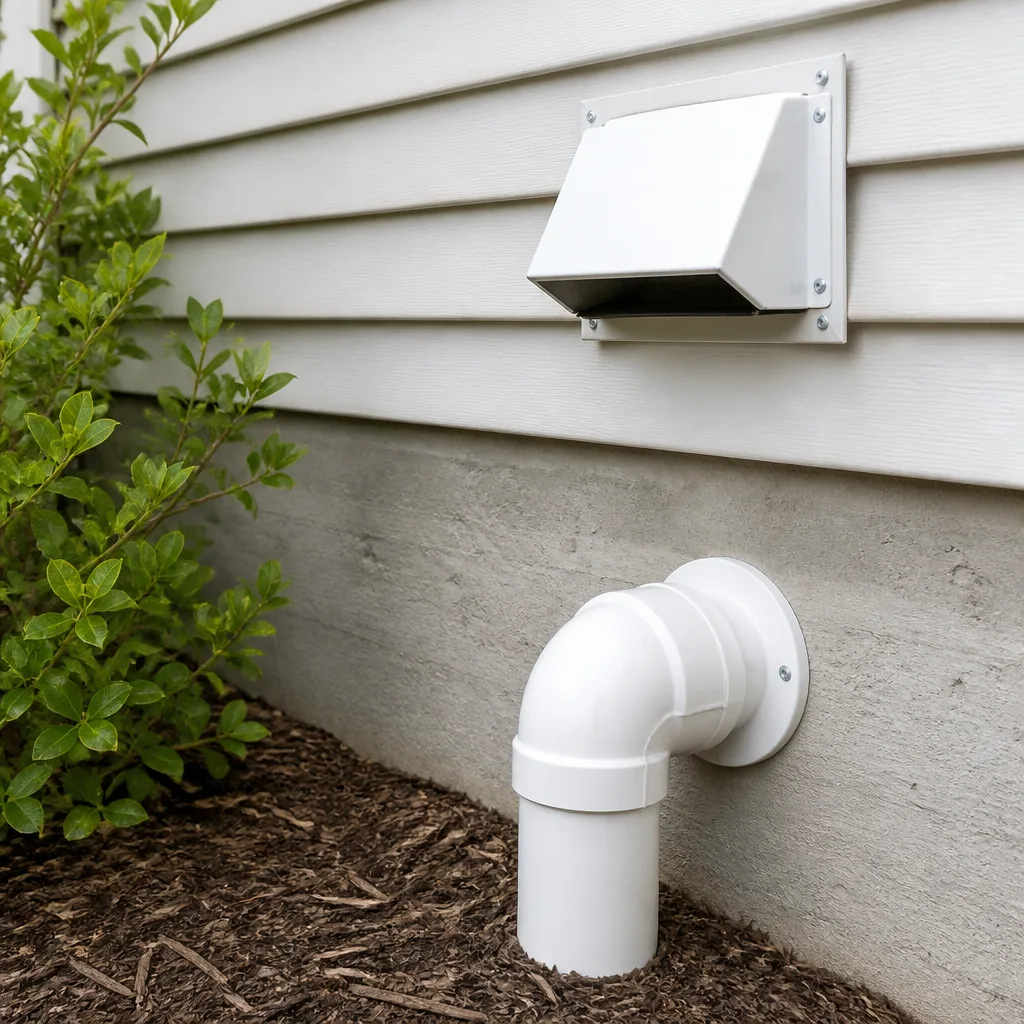 Dryer vent cleaning
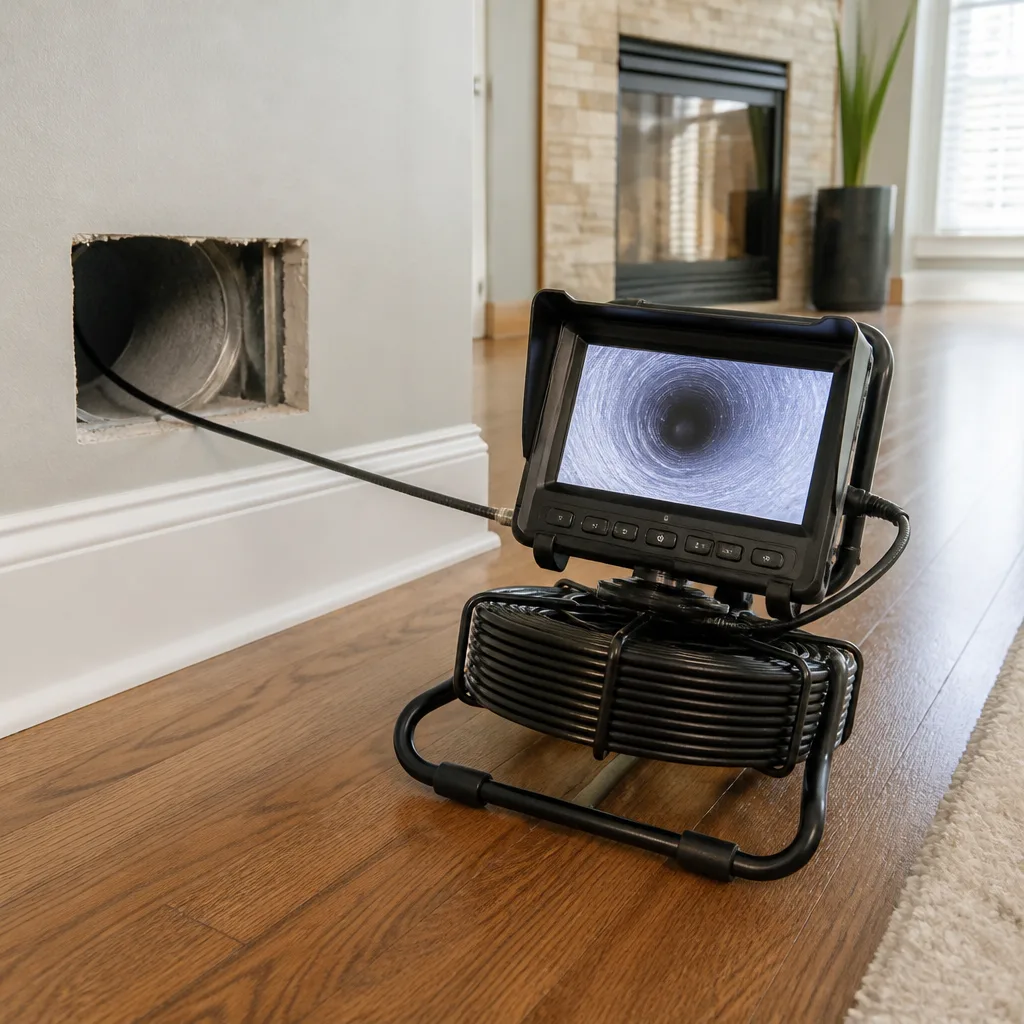 Camera inspection
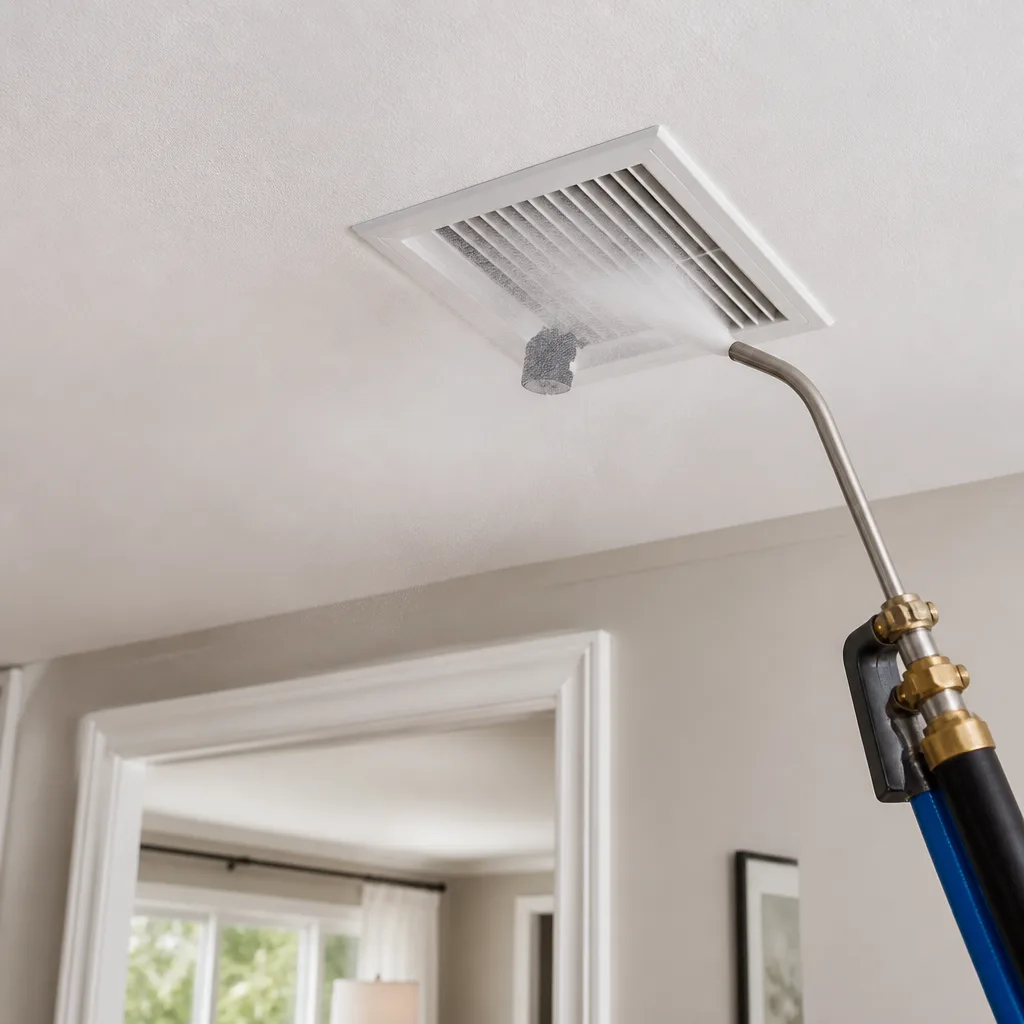 Sanitizing & deodorizing
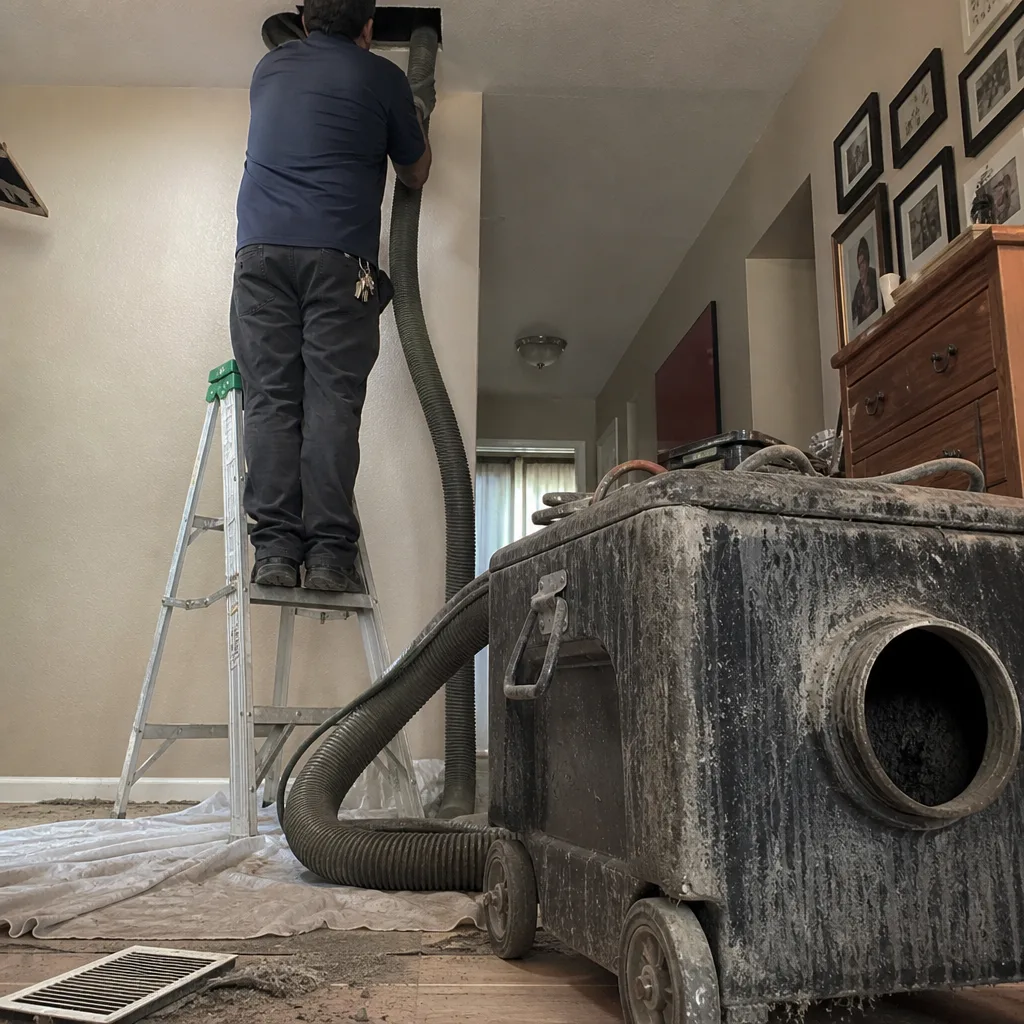
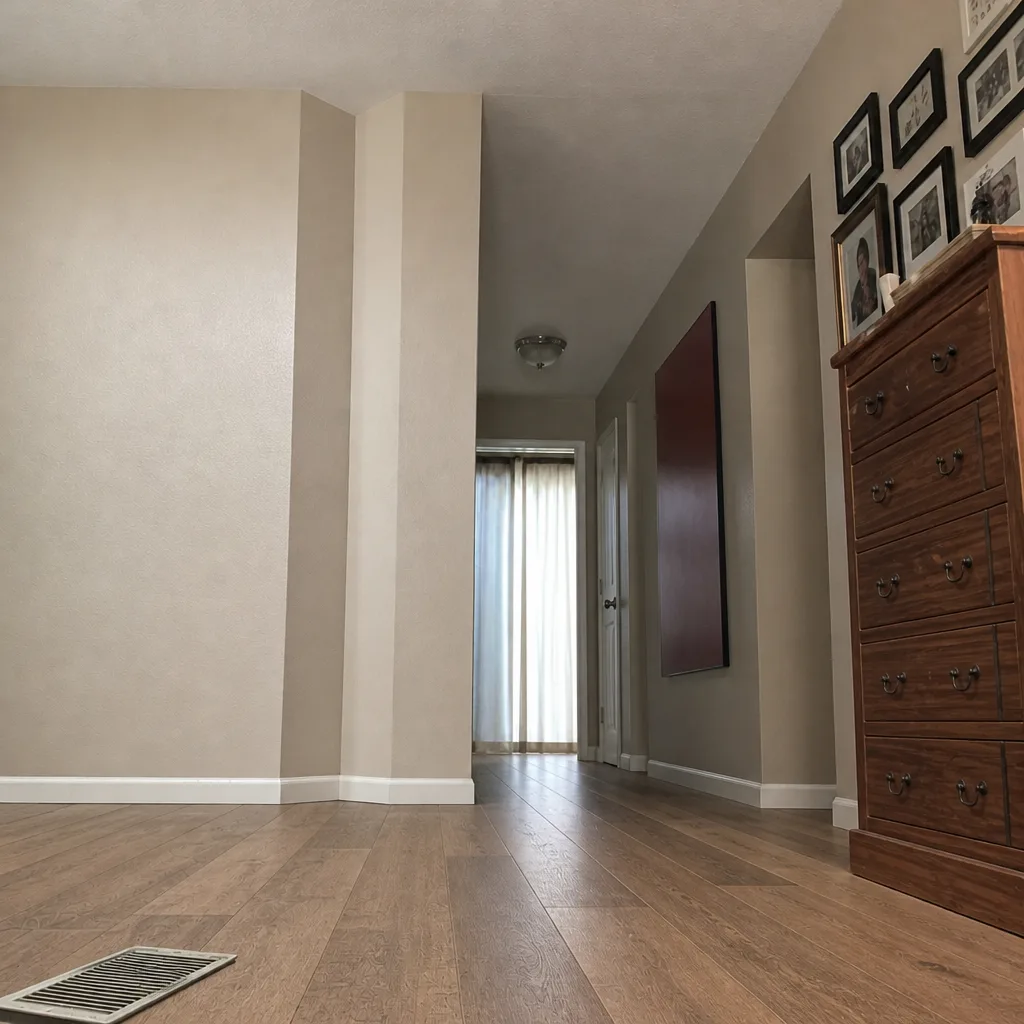
Whole-system duct and dryer vent check with before-and-after photos - you see exactly what came out of your vents
That "$99 whole-house special" is a bait ad - the real number appears once they are in your hallway, or the "clean" is a shop-vac at the register. We photograph the inside of your ducts before and after instead.
Air Duct Cleaning Maintenance Schedule: What to Do and When
Here’s the thing most maintenance schedules won’t tell you: a MERV-8 filter and a MERV-13 filter installed in two identical Gilroy homes produce completely different duct contamination rates. Yet nearly every cleaning recommendation treats them the same. The fixed “every 3-5 years” rule ignores what actually drives duct fouling: how many pets live in the house, whether you renovated last spring, what grade of filter you run, and how Gilroy’s dust cycle affects your specific neighborhood. This guide replaces the generic calendar with a condition-based framework built around real system indicators you can see, measure, and log.
Quick Answer
Most Gilroy homes need professional air duct cleaning every 2 to 5 years, but the real answer depends on four variables: your filter’s MERV rating, household pets, renovation history, and visible register buildup. A home with a MERV-13 filter, no pets, and no recent construction can go 4-5 years between cleanings. A home with a MERV-8 filter, two shedding dogs, and a kitchen remodel last fall should be inspected within 12 months. You don’t need a calendar reminder – you need a filter-loading log and a bi-monthly register check, both of which take under five minutes.
Styles & brands we work with
- Whole-home duct cleaning
- Dryer vent cleaning
- Camera inspection
- Sanitizing & deodorizing
Table of Contents
- How Filter MERV Rating Changes Your Cleaning Schedule
- The Condition-Based Decision Tree: When to Override the Calendar
- Gilroy’s Two-Season Dust Pattern and When It Matters Most
- What to Log Between Professional Cleanings
- Homeowner Tasks vs. Professional Equipment Work
- The Dryer Vent Schedule: A Separate Maintenance Track
- Common Mistakes to Avoid
- When to Call a Professional
How Filter MERV Rating Changes Your Cleaning Schedule
Your filter grade doesn’t just determine how much particulate gets pulled out of the air before it enters your ductwork. It directly determines how fast duct surfaces accumulate a sticky dust film that holds onto whatever drifts through. A MERV-8 filter captures roughly 70-85% of particles in the 3-10 micron range depending on the specific media. A MERV-13 captures 90% or more of the same range, plus a meaningful share of the sub-micron particles that MERV-8 lets straight through.
What does this mean for your maintenance schedule in practice? A Gilroy home running a MERV-8 filter with central air running year-round will typically show visible register buildup and measurable static pressure changes within 18-24 months. That same home upgraded to a MERV-13 media filter, assuming the system can handle the added resistance, can often extend that window to 36-48 months before professional cleaning becomes necessary.
The filter upgrade itself is a maintenance act. It’s not just an air-quality improvement. When we install or recommend higher-grade filtration, we’re physically reducing the deposition rate on every interior duct surface in the house. That’s why our approach at Duct Cleaning Gilroy always starts with understanding what filtration is actually in place. If a homeowner has Honeywell or Aprilaire filtration components already installed, we know how to work around them without disrupting the setup or voiding any warranty terms.
Filter Loading Time as a Leading Indicator
How fast your filter loads is the single most useful measurement a homeowner can track. It tells you how much particulate is moving through the system regardless of what the calendar says.
Here’s the practical guideline we give to every Gilroy homeowner during an inspection:
- Filter loads visibly dirty in under 30 days: Your system is moving a lot of particulate. Inspect registers monthly. Plan for professional cleaning every 2-3 years at minimum.
- Filter shows moderate loading at 60-90 days: This is the normal range for a well-sealed home without unusual dust sources. A 3-4 year cleaning interval is usually appropriate.
- Filter still looks almost clean at 90 days: Either your filtration is doing its job extremely well or airflow is bypassing the filter entirely. Worth confirming filter seating and checking for gaps around the filter rack.
Write down the date every time you swap a filter. That log, kept consistently, becomes the most honest scheduling tool you own. It beats any generic chart because it describes your house, not a statistical average.
The Condition-Based Decision Tree: When to Override the Calendar
Certain events change your duct contamination profile overnight. They don’t care when your last cleaning happened. A fire in the hills east of Gilroy can push smoke residue through open windows and into return ducts even with a clean filter. A kitchen remodel with drywall dust actively circulating through the HVAC system will load the coils and duct surfaces within weeks, not years.
Here’s the decision tree we walk through with homeowners who ask whether they need cleaning now or can wait:
- Was any part of the home renovated or demolished in the last 12 months? If yes, and the HVAC system ran during construction, schedule an inspection. Drywall dust is abrasive, fine enough to pass through most filters, and it cakes onto blower wheels and coil fins. Waiting won’t make it go away; it will make the cleaning more involved.
- Has rodent activity been found or suspected in the attic, crawlspace, or around the foundation? Rodents nest in and around duct runs. Their droppings and urine create contamination that no filter can address. If you’ve trapped or evicted rodents, get the ducts inspected before the next heating or cooling season.
- Did a new pet join the household in the last year? One retriever adds more dander and hair to the air stream than three people. If the new pet sheds heavily and you run a basic MERV-8 filter, plan on a cleaning within 12-18 months of the animal’s arrival.
- Was the HVAC system or air handler replaced recently? New equipment pulls air through existing ductwork. That’s the moment to start with clean ducts. Otherwise, the new blower immediately distributes whatever accumulated in the old duct runs.
- Is there visible mold growth at any supply or return register? If you can see mold at the register face, there’s often more you can’t see deeper in the run. This isn’t a wait-and-see situation. Get a professional assessment and understand whether the issue is surface-level or systemic. We can advise on whether the problem is within our air duct cleaning scope or if it requires remediation referral.
- Have occupants noticed persistent respiratory irritation, unexplained dust accumulation on furniture within days of cleaning, or a musty odor that worsens when the system runs? Each of these is a condition trigger. The combined presence of two or more suggests the duct surfaces themselves have become a particulate reservoir.
Each of these triggers overrides any calendar-based interval. If you hit one, you’re not “due” – you’re overdue. The calendar framework works for stable conditions. Condition triggers work for real life.
Gilroy’s Two-Season Dust Pattern and When It Matters Most
Gilroy’s air quality follows a predictable annual rhythm. It’s not just about pollen counts. The city sits in a valley where agricultural activity, seasonal wind patterns, and temperature inversions combine to create two distinct particulate seasons that directly affect how fast ducts load.
The first runs from late summer through early fall. Harvest activity in the agricultural land surrounding Gilroy kicks up fine soil dust and crop residue. That’s the season when we see the fastest filter loading times across the valley. Garlic processing operations release organic particulate that finds its way indoors through open windows, screen doors, and every crack in the building envelope. If you’re running a MERV-8 filter during August, September, or October, check it at the 30-day mark. Don’t wait for the standard 90-day interval. The filter will often be dark with organic dust by week four or five.
The post-harvest fall window is the worst time to skip a filter check. Systems are still running in cooling mode, the outdoor particulate load is peaking, and the filter is doing more work than during any other season. A clogged filter at this point forces the blower to work harder, pulls unfiltered air around the filter edges, and sends dirt directly into the supply side of the system.
The second season arrives with spring and early summer. Pollen from valley oaks, ornamental plantings, and agricultural crops creates a different kind of loading profile. It’s lighter than harvest dust but stickier. Pollen grains adhere to filter media quickly, and they coat duct surfaces with a protein-rich film that other particles then bond to.
This two-season pattern points to an optimal cleaning window. If you’re going to schedule professional cleaning, aim for late spring or early summer, before the cooling season hits its peak load. The ducts have accumulated the winter’s share of indoor dust and the spring pollen influx, and cleaning them before the AC runs continuously all summer means you’re not spending four months recirculating accumulated debris every time the system cycles. Late May through early July is the sweet spot for most Gilroy homes.
The same logic applies to dryer vents, though the mechanics differ. Harvest dust and spring pollen both make their way into laundry exhaust streams, and a restricted dryer vent cleaning job in late fall is one of the most common calls we take. The dryer’s been working against a dirty duct all summer, and the extra lint plus the seasonal dust creates a restriction that suddenly shows up as longer dry times and an overheated dryer cabinet.
What to Log Between Professional Cleanings
The most useful maintenance document in any Gilroy home is a simple spiral notebook or a notes app with three columns. It’s not technical. It takes five minutes per entry. And it will tell you more about your system’s condition than any calendar chart.
Here’s what to track:
- Filter replacement dates and visual loading. Note the date you swapped the filter, the MERV grade of the replacement, and one word describing the old filter’s condition: clean, light, moderate, heavy, or caked. Over a year, this tells you exactly how loading changes season to season.
- Register dust buildup rate. Once every two months, run a white paper towel along the top edge of one supply register in a heavily used room. Note whether the towel comes away clean, lightly dusty, or visibly gray. Do the same on a return grille. If the register in a room that gets regular HVAC use shows heavy gray dust within two weeks of wiping it clean, your ducts are actively shedding particulate into the living space.
- Static pressure changes. This one requires a professional once, but it’s worth understanding. If we measure your system’s static pressure during a cleaning or inspection, write the number down. A significant change in static pressure at a future visit – in either direction – can indicate a new restriction, a leaking return, or a filter that’s being used outside its intended pressure drop range. Honeywell and Aprilaire system components often have pressure port access, and a homeowner who keeps a log can spot drift early.
- Odor notes. A musty smell at startup that fades within 30 seconds is usually just the coil sweating during short cycles. A musty smell that persists for several minutes and returns every cycle suggests organic growth on the coil or in the drain pan. Write down when you smell it, how long it lasts, and which rooms it’s strongest in. Pattern recognition beats memory.
- Dryer cycle times. One line per month: “dryer, towels, 45 minutes, normal” or “dryer, towels, 70 minutes, still damp.” A steady upward trend in dry times across similar loads is the earliest warning sign of a restricted vent. It appears months before the nuisance trip of the high-limit thermostat.
This log is also the document that lets a professional do a better job. When a homeowner can tell us “the filter loaded heavy in August and September, light through winter, and the register dust came back within three weeks in April,” we know exactly what we’re looking for before we run the Rotobrush through the system.
Homeowner Tasks vs. Professional Equipment Work
There’s a clear line between what a homeowner should do and what needs pro-grade equipment. Blurring that line is how ducts get damaged and how maintenance schedules get derailed.
Homeowner Tasks – Do These Regularly
- Filter replacement: Every 1-3 months depending on MERV grade, season, and household factors. This is the single highest-impact maintenance action you control.
- Register and grille wipe-downs: A damp cloth on visible surfaces every other month. It’s cosmetic for the visible portion but prevents dust caking at the register opening that can restrict airflow at the room level.
- Visual dryer vent exterior check: Once a month, check the exterior vent termination for lint buildup. Confirm the flap opens when the dryer runs. Clear away vegetation and debris within a foot of the termination.
- Return-air path confirmation: Make sure furniture, rugs, or stored boxes aren’t blocking return grilles. A blocked return starves the blower, changes pressure relationships, and forces the system to pull air from unexpected paths, including wall cavities and unconditioned spaces.
- Baseline photos: Take a photo of one supply register and one return grille interior every six months. You’re building a visual record that makes it honest to say whether things are getting better, worse, or staying the same.
Professional Tasks – Don’t DIY These
- Contact-based duct cleaning: Professional rotary brush systems physically scrub the duct walls. A shop-vac and a drill-mounted brush from the hardware store won’t reach the full run, won’t capture what it loosens, and can damage flex duct or pull apart poorly sealed joints. Our Rotobrush setup runs a Nikro HEPA vacuum the entire time, so dislodged material is captured rather than redistributed. The brush scrubs; the vacuum contains. That’s the difference between cleaning and rearranging.
- Dryer vent interior cleaning from both ends: Lint doesn’t just collect at the exterior termination. It accumulates along the entire vent run, particularly at elbows and sags. Clearing only the exterior end leaves a restriction deeper in the run that continues to build. Professional rotary vent cleaning tools reach the full length and confirm airflow afterward.
- Coil and blower wheel cleaning: The coil sits in the air stream after the filter. If the filter was neglected for a stretch, the coil carries the evidence. Cleaning a coil properly requires access, appropriate cleaning chemistry, and a strategy for keeping the cleaning solution out of the electrical compartment. It’s not a homeowner job.
- Static pressure and airflow measurement: Understanding how hard your blower is working requires instruments and a baseline. If your home has Honeywell zoning or an Aprilaire ventilation system, the pressure relationships matter even more, and a misread leads to misdiagnosis.
- Duct repair and sealing: If an inspection finds a disconnected run, a crushed flex section, or a leaking joint, the fix belongs to someone who knows how duct systems are supposed to perform. We inspect before we clean and we repair what needs repairing. Not every company does both, and cleaning around a damaged section just sends conditioned air into an attic or wall cavity instead of into your rooms.
The Dryer Vent Schedule: A Separate Maintenance Track
Dryer vents don’t follow the same schedule as HVAC ducts. They run a different duty cycle, handle a different contaminant, and fail in a different way. Treating them as an add-on to a duct cleaning visit misses the point of why they matter.
Lint is not dust. It’s the fine fiber shed from every load of laundry, and it accumulates in the vent run at a rate determined mostly by how many loads the household runs, not by the MERV rating of any filter. A family of four doing five loads a week through a 15-foot vent run will build a meaningful restriction faster than a single person doing two loads through a 30-foot run. There’s no filter upstream of the dryer vent, and nothing captures lint except the dryer’s own screen.
Here’s the schedule logic:
- Every load: Clean the dryer’s lint screen. This is non-negotiable and takes ten seconds.
- Monthly: Check the exterior vent termination. Look for visible lint accumulation, confirm the flap moves freely, and note whether the exterior area stays clear.
- Every 12 months for a typical household: Have the full vent run professionally cleaned from both ends. This is the annual dry-clean for the entire dryer exhaust path.
- Every 6-9 months if: The household runs more than six loads per week, the vent run exceeds 20 feet or includes multiple elbows, or the dryer has been showing longer cycle times on similar loads.
- Immediately if: The dryer cabinet feels unusually hot during operation, the laundry room smells like burnt lint during a cycle, or dry times have jumped from 45 minutes to 75+ minutes on normal loads.
The fire-safety context is not an upsell. A restricted dryer vent is a leading household fire-risk factor, and it develops silently over months. We clear the vent, measure airflow at the termination, and confirm the full path exhausts properly before we leave. That last step – verification – is the difference between “we ran a brush through it” and “we confirmed the system works as designed.”
For homes with Abatement Technologies air filtration equipment already installed for other reasons, we can also confirm whether the laundry area is contributing to the overall household particulate load through the shared return-air path. That’s an unusual finding but worth knowing in homes where a laundry room sits adjacent to a main return.
Common Mistakes to Avoid
- Replacing the filter on a strict 90-day rotation without ever looking at it. A filter that’s black at day 45 in September is telling you something about the air moving through your Gilroy home. Swapping it and noting nothing means you lose the signal. Log the condition, not just the swap.
- Assuming a newly built or newly renovated home has clean ducts. Construction debris in duct runs is common, even in quality builds. Drywall dust, sawdust, and packaging material end up in the system before the first owner moves in. A pre-occupancy cleaning is far cheaper than living on top of construction dust for the first three years.
- Running the HVAC system during interior painting, sanding, or any dust-generating work. Seal the returns, cover the supplies, and keep the system off. Dampers and plastic sheeting are cheaper than a full duct clean afterward.
- Treating a dirty register as the whole problem. The register face is the visible end of a much longer duct run. Wiping it clean may make the room look better, but if the dust returns in two weeks, the contamination source is upstream. Clean the register, but use the recurrence rate as your indicator.
- Skipping the annual dryer vent cleaning because “we barely do laundry.” Infrequent use creates a different problem: the vent stays moist longer after each cycle, and lint that would have been pushed out by regular airflow instead sits and accumulates. Low-use vents often show worse restriction per load than high-use vents.
- Upgrading to a MERV-13 filter without confirming the system can handle the added pressure drop. A high-efficiency filter on an undersized duct system increases static pressure, reduces airflow, and makes the blower work harder. The filter catches more, but the system runs worse. If you’re thinking about upgrading filtration, have the system’s static pressure measured first.
- Cleaning ducts in response to a smell without addressing what caused the smell. A musty odor often points to the coil or drain pan, not the duct surfaces. Cleaning the ducts while the coil stays dirty just buys a few weeks before the smell returns. A good inspection identifies the source before any brush goes in the system.
When to Call a Professional
Most of this guide is about what you can do yourself, and the honest truth is that most maintenance tasks are homeowner-level. But there are specific moments where professional equipment and experience change the outcome. If you see visible mold at a register, if your filter loads heavy within a month of replacement, if a renovation ran dust through the system, or if the dryer is taking twice as long on normal loads, you’re past the point of DIY remedies. Duct Cleaning Gilroy offers free estimates in Gilroy – call (833) 589-9833. We answer 24/7. Fast dispatch from 7am to 7pm, Sunday through Friday. We inspect before we clean, we show you what we find, and we repair what needs repairing instead of cleaning around it.
See the difference
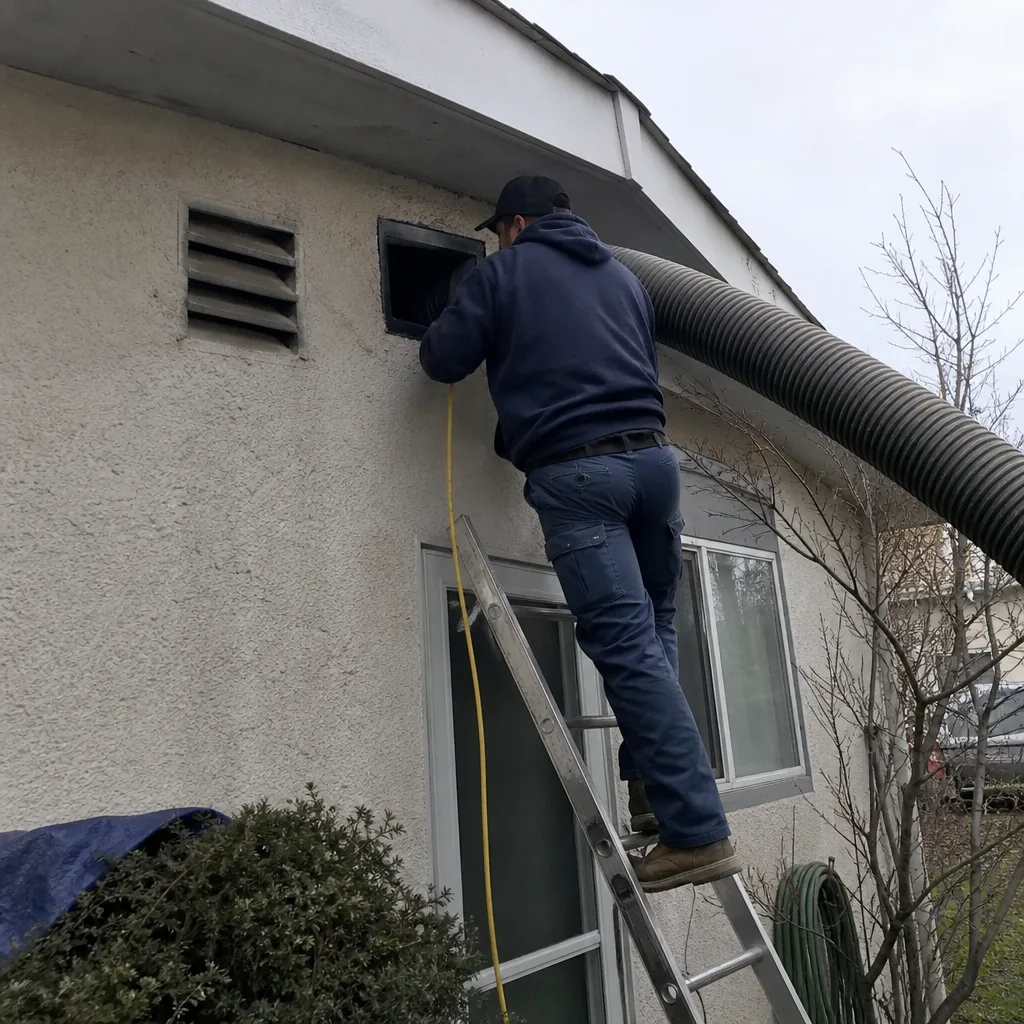 Before
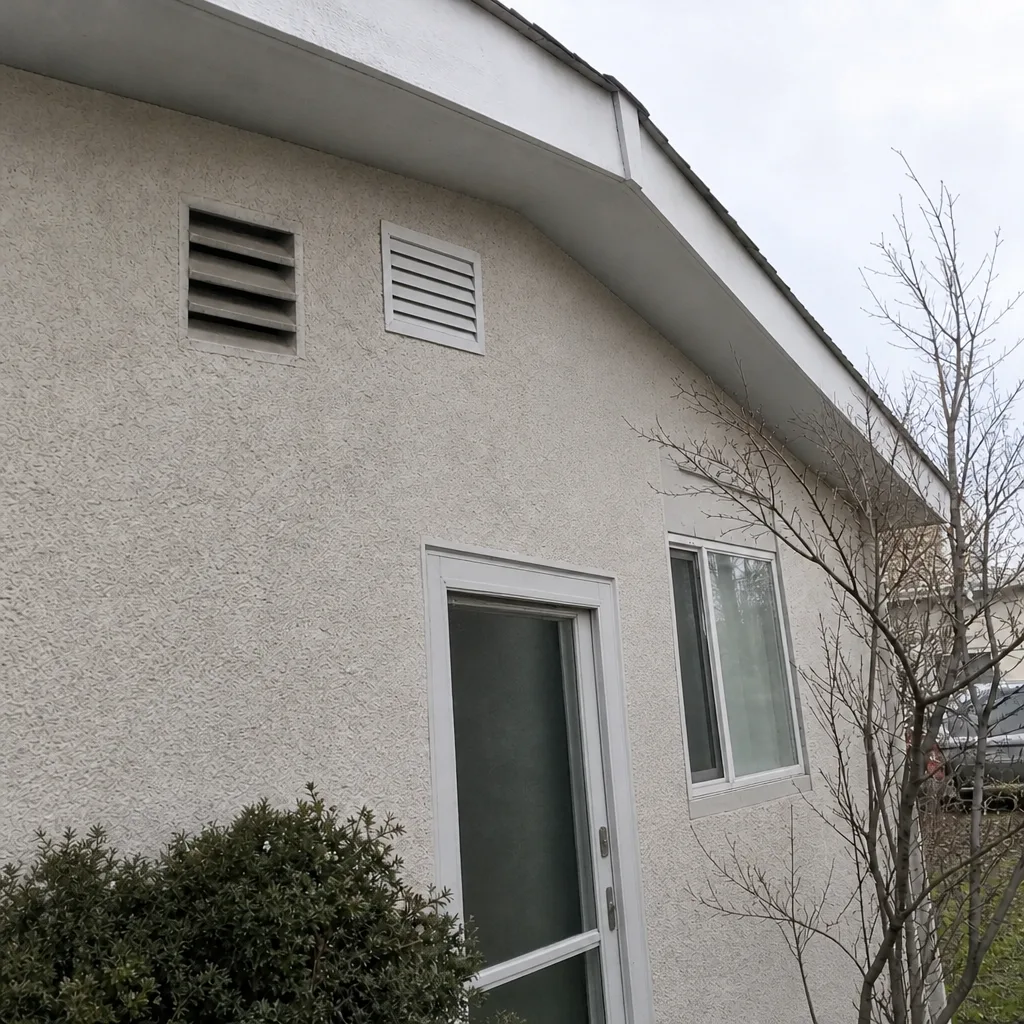 After
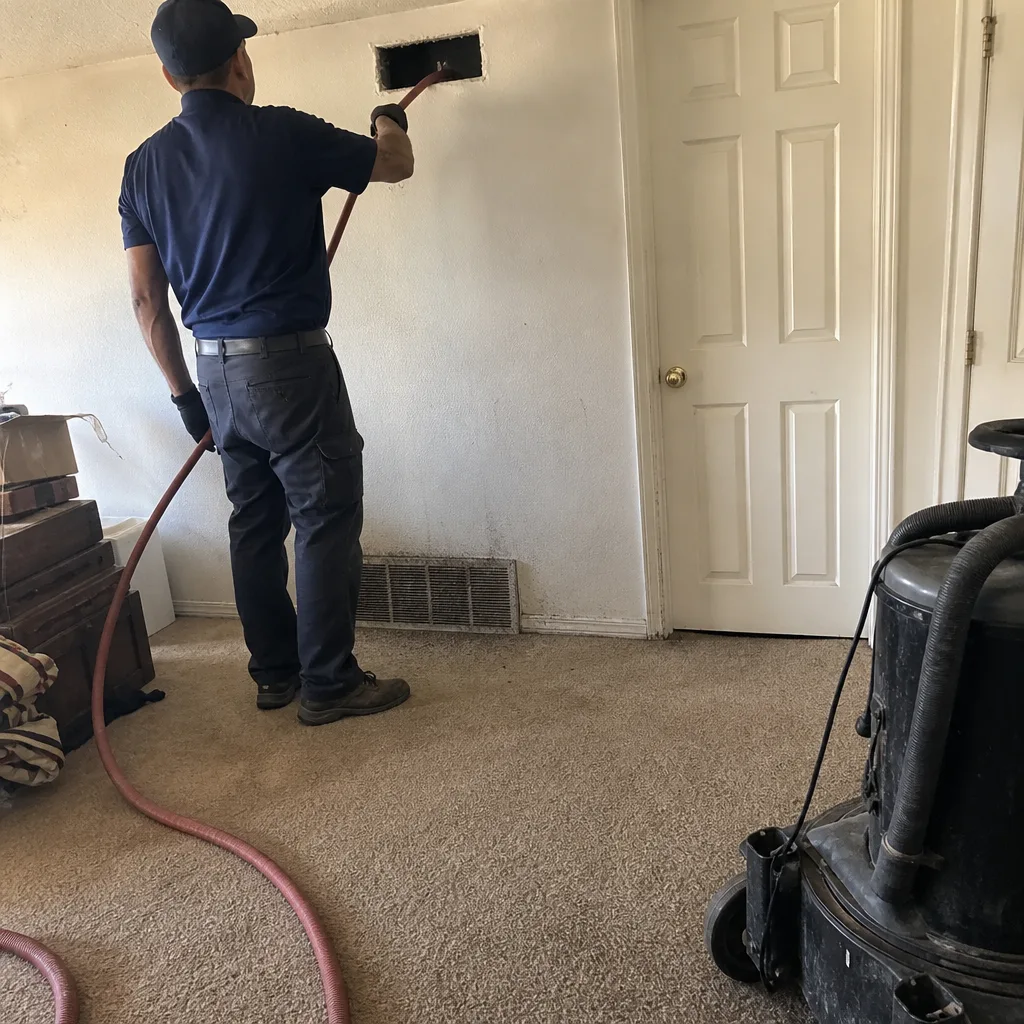 Before
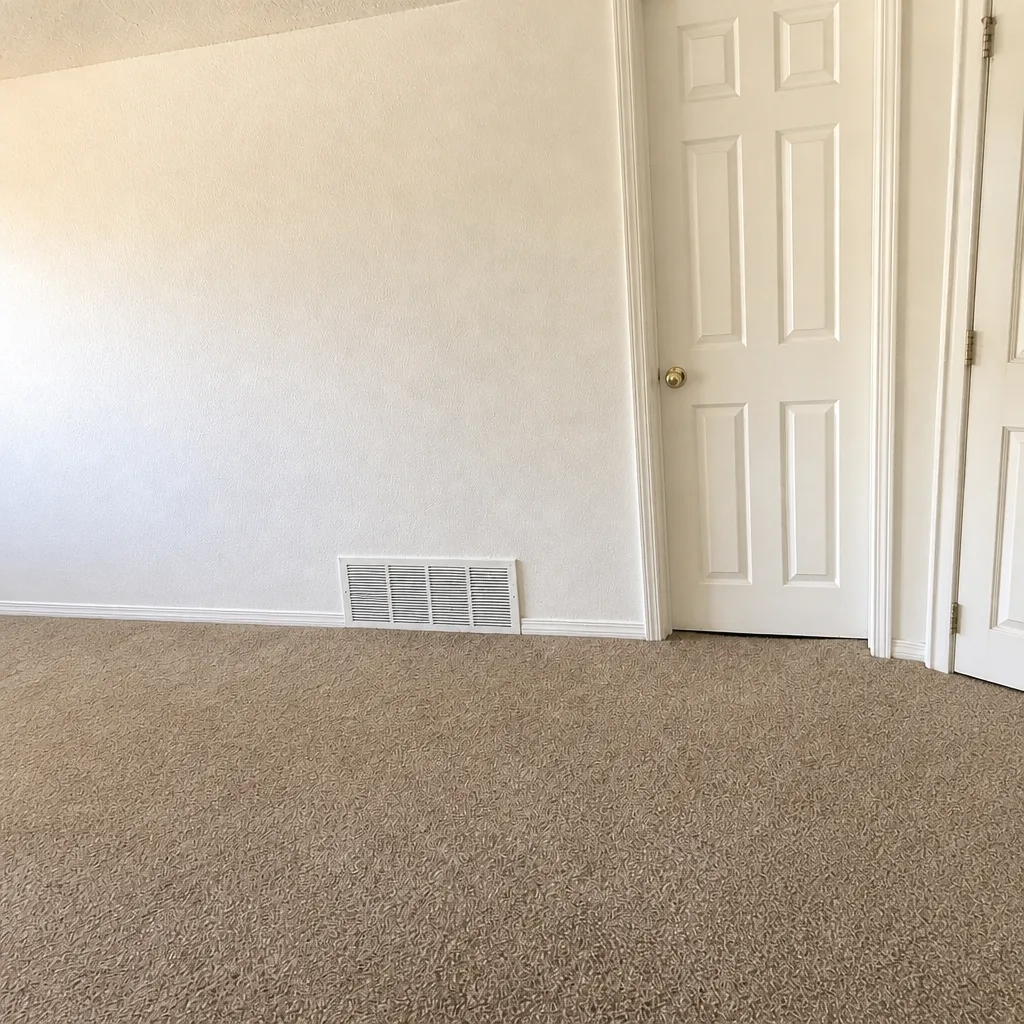 After
 Before
 After
Frequently Asked Questions
Most homes in Gilroy need professional air duct cleaning every 2 to 5 years, with the interval set by filter grade, pet load, and renovation history rather than a fixed calendar. Homes with MERV-13 filtration, no pets, and no recent construction can often go 4-5 years, while homes with basic filters and heavy shedding pets may need attention within 18 months. Call (833) 589-9833 for an honest assessment based on what you’re seeing in your registers and filters.
Late spring through early summer is the optimal window because it clears winter indoor dust and spring pollen before the cooling season’s heavy run cycle. Cleaning in late May, June, or early July means your system isn’t recirculating accumulated debris through the hottest months. Fall harvest season is the worst time to skip filter checks, but cleaning then is still better than waiting if your registers are showing heavy buildup.
Yes, in most residential systems, a properly installed MERV-11 or MERV-13 filter reduces the rate at which duct surfaces accumulate particulate, which extends the interval between professional cleanings. The catch is that the system must be able to handle the added pressure drop without starving airflow. If you run Honeywell or Aprilaire filtration components, we can verify the pressure relationships during an inspection.
Look for three indicators: heavy gray dust reappearing on registers within two weeks of wiping them clean, a filter that loads from clean to heavily soiled in under 30 days, and a musty or dusty odor that returns every time the system starts. Any one of these is worth a professional look. All three together means the duct surfaces are acting as a particulate reservoir, not just a channel.
Yes. The dryer vent carries lint from every laundry load, not conditioned air, and it has no filter upstream of it. A household running five or more loads per week should have the vent professionally cleaned annually, and homes with long vent runs or multiple elbows may need it every 6-9 months. The fire-safety relevance isn’t theoretical – a restricted vent is a leading household fire-risk factor, and it develops without any noise or visible warning.
You can clean the first few feet of duct you can reach from a register opening, but you can’t clean the full run, and you can’t contain what you dislodge. A shop-vac setup tends to pull debris toward the opening while pushing finer particulate deeper into the system. Professional cleaning uses a rotary brush to physically scrub the duct wall and a HEPA-rated vacuum running simultaneously to capture the loosened material. The containment is the difference.
The Bottom Line
Every home in Gilroy has its own duct contamination profile, and the only honest maintenance schedule is the one that responds to what your system is actually doing. Track your filter loading. Note register dust recurrence. Mark dryer cycle times. Use those data points, not a calendar, to decide when the system needs professional attention. When it does need it, use equipment that scrubs and captures rather than blows and recirculates. The goal isn’t to clean ducts on a schedule – it’s to know when the system is telling you it’s time, and to act before small fouling becomes a real problem.
Call (833) 589-9833 for a free estimate. We answer 24/7. Fast dispatch from 7am to 7pm, Sunday through Friday.
Written by the team at Duct Cleaning Gilroy, serving Gilroy since 2011.