
Last updated November 4, 2026
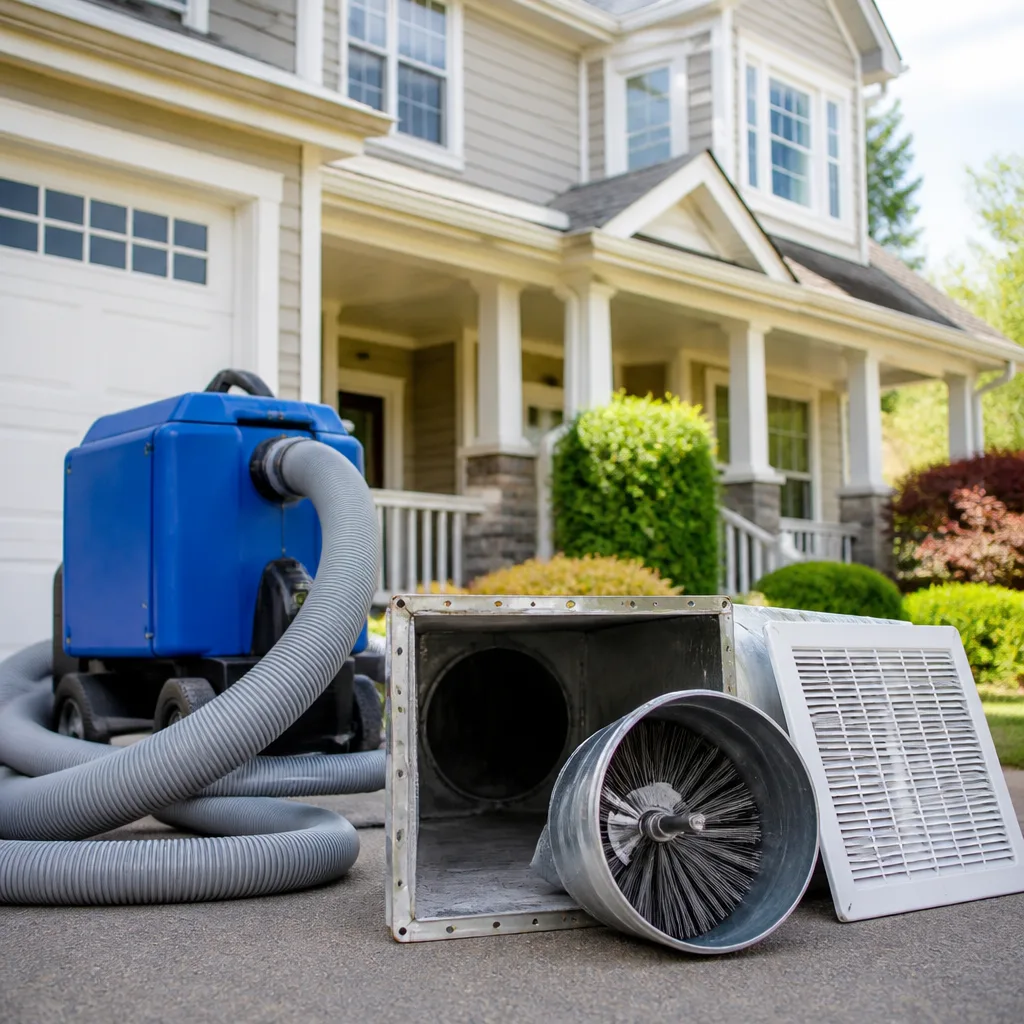 Whole-home duct cleaning
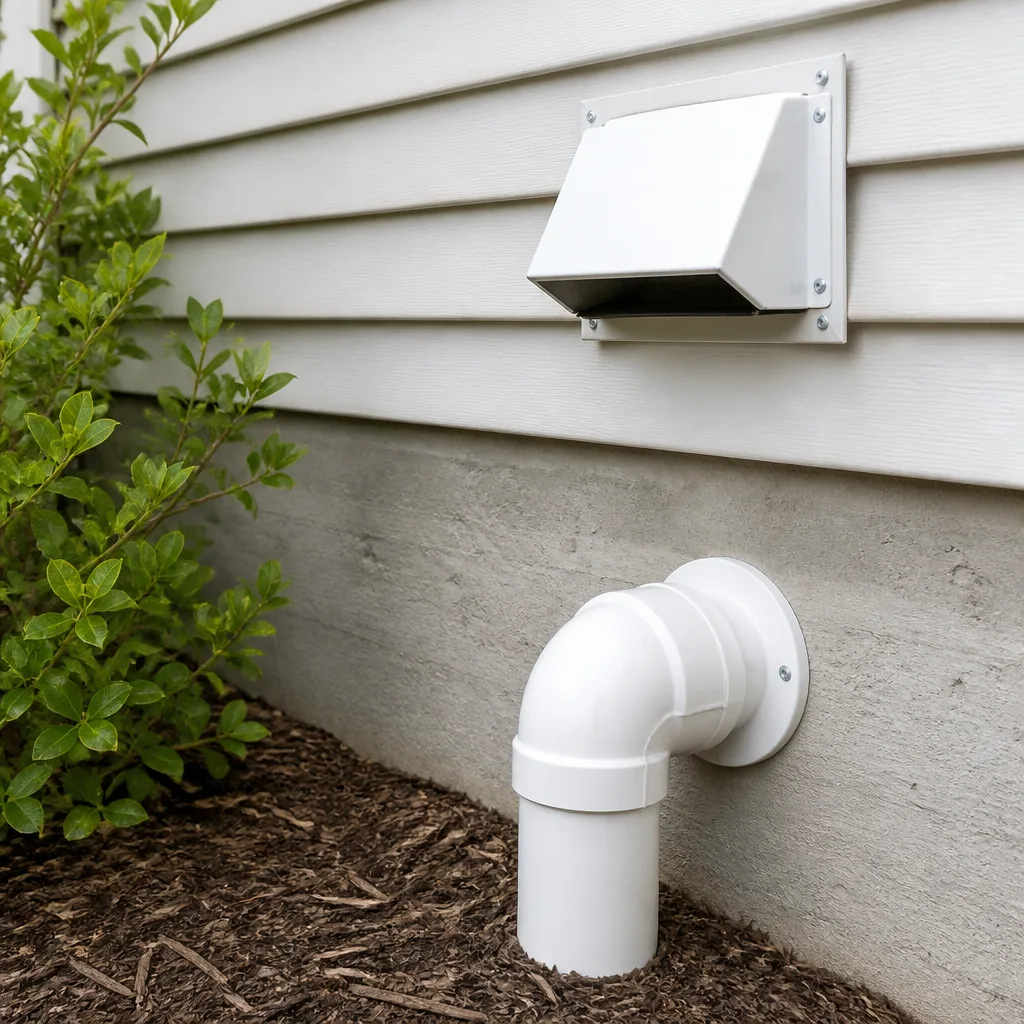 Dryer vent cleaning
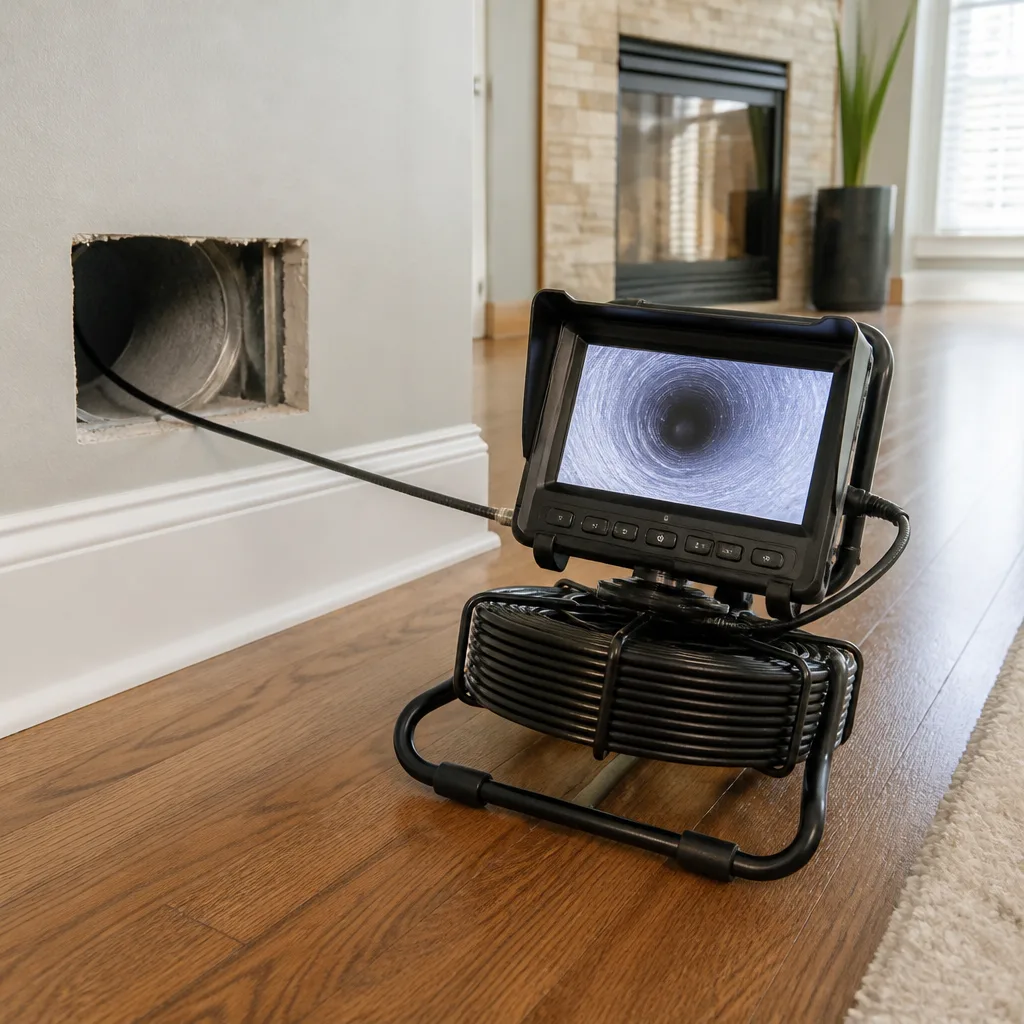 Camera inspection
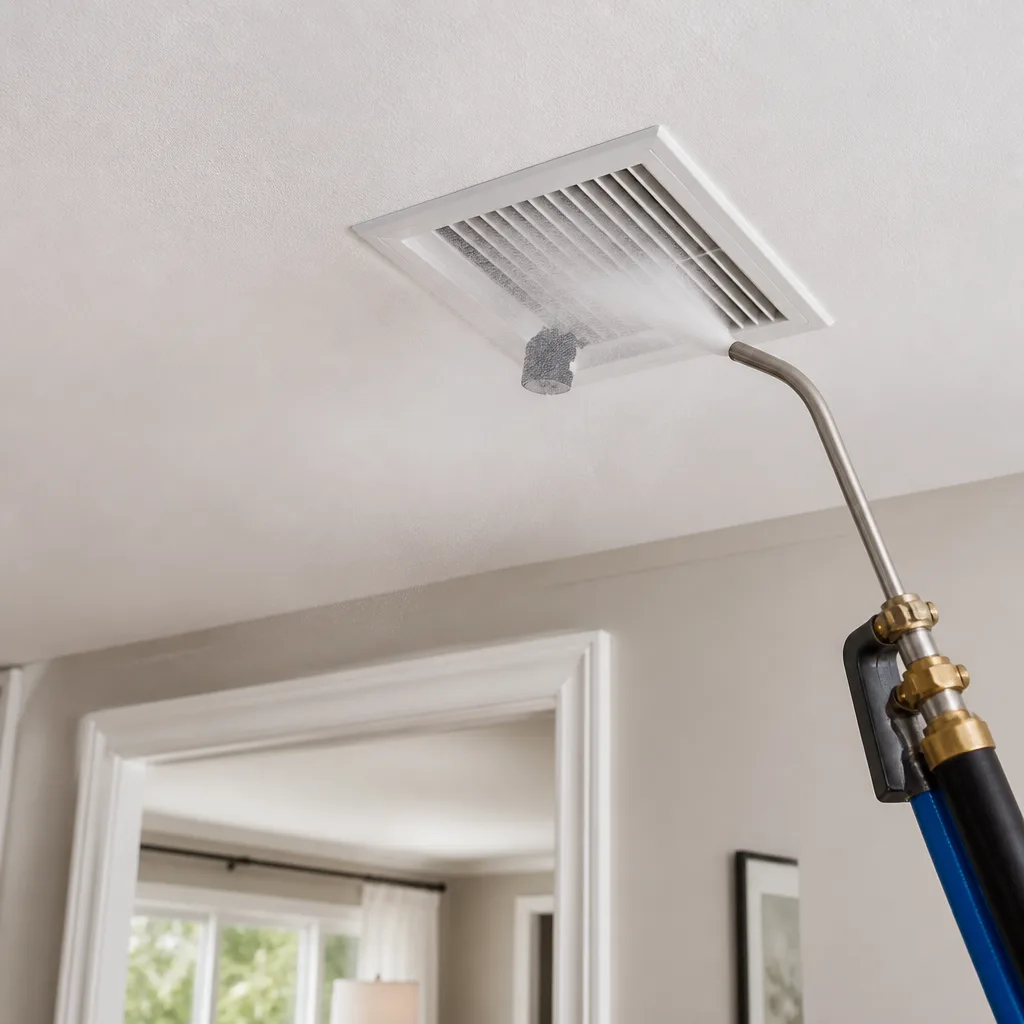 Sanitizing & deodorizing
Whole-system duct and dryer vent check with before-and-after photos - you see exactly what came out of your vents
That "$99 whole-house special" is a bait ad - the real number appears once they are in your hallway, or the "clean" is a shop-vac at the register. We photograph the inside of your ducts before and after instead.
The Complete Guide to Air Duct Cleaning in Gilroy
Most duct cleaning guides were written for a hypothetical house in a hypothetical city. Gilroy sits downwind of active farmland, inside a regional wildfire smoke funnel, and on some of the hardest water in Santa Clara County – none of that shows up in the advice you’ll find elsewhere. This guide maps the actual mechanical process, tool by tool and zone by zone, to what Gilroy homes specifically deal with. You’ll learn what actually gets removed from your ducts here, which cleaning methods work, which ones don’t, what it costs, and how to verify the job was done properly before you pay for it.
Quick Answer
Air duct cleaning in Gilroy typically costs between $450 and $900 for a full system, depending on home size, duct material, and contamination level. A legitimate cleaning uses mechanical agitation paired with HEPA-filtered negative air, not a shop vac and a brush kit, and should include before-and-after camera documentation. In Gilroy specifically, agricultural dust, wildfire smoke residue, and mineral scale from hard water mean duct systems here load up faster and differently than in most of the Bay Area.
Styles & brands we work with
- Whole-home duct cleaning
- Dryer vent cleaning
- Camera inspection
- Sanitizing & deodorizing
Table of Contents
- What Actually Gets Into Gilroy Ducts
- How Real Duct Cleaning Works
- Duct Materials in Gilroy Homes and Why They Matter
- Source Removal vs. the “Sanitizing” Language
- What Air Duct Cleaning Costs in Gilroy
- How to Verify the Work Was Actually Done
- Dryer Vent Cleaning in Gilroy: The Fire-Safety Factor
- How Often Does It Really Need Doing?
What Actually Gets Into Gilroy Ducts
Every city’s duct systems collect dust. Gilroy’s collect a specific kind. The difference matters because it changes what a cleaning crew needs to do.
First, agricultural particulate. The farmland surrounding Gilroy produces pollen from row crops, orchards, and field operations throughout much of the year. Tractor work kicks up soil dust that carries fine mineral particles and occasional pesticide or fertilizer drift. This particulate is finer than typical household dust, which means it packs into duct surfaces rather than sitting loosely on top of them. A casual vacuum pass won’t lift it. It takes contact agitation.
Second, wildfire smoke. During California fire seasons, smoke funnels into the southern Santa Clara Valley and settles into homes. What most homeowners don’t realize is that smoke residue inside ducts isn’t just soot. It’s a mix of char, ash, and vaporized resins that cool and adhere to duct walls as a slightly tacky film. That film then captures ordinary dust and holds it. Ducts in Gilroy that look evenly gray rather than patchy are often carrying a smoke residue layer underneath the visible dust. Removing it requires aggressive brushing, not just vacuuming.
Third, hard water effects. Gilroy’s water is among the hardest in Santa Clara County. That has a direct mechanical consequence for HVAC systems: air conditioning coils sweat during the cooling season, and the condensate evaporates leaving mineral scale behind. Over time, that scale builds on coil surfaces and the drain pan. It doesn’t just sit there; it becomes host material for biological growth and a trap for dust. A proper duct cleaning in Gilroy should include coil inspection and cleaning where accessible, because the coil is the point where the air stream picks up whatever the water left behind. Companies that clean ducts but never look at the coil are skipping the part of the system most affected by Gilroy’s water chemistry.
The combined result: Gilroy duct contamination is finer, stickier, and more compacted than what a typical urban duct system accumulates. Cleaning it well requires the right tools and a process that accounts for all three sources.
How Real Duct Cleaning Works
There are two distinct approaches to duct cleaning, and they produce two very different results. Understanding the difference is how you avoid paying for the worse one.
The first approach is the consumer-grade method: a portable vacuum, often a modified shop vac, connected to a brush attachment fed through registers. The technician pushes the brush around inside the duct while the vacuum pulls at the same opening. This removes loose dust from the first few feet of ductwork near each register. It does not clean the full run, it does not remove compacted debris, and it cannot reach trunk lines. It is inexpensive, fast, and mostly cosmetic.
The second approach is source removal, which is what the air duct cleaning process should actually be. It works like this:
- Inspection. A camera is run through the main trunk and branch lines before anything else. We look for duct material type, damaged sections, disconnected joints, and the location and density of the contamination. No one should be cleaning a system they haven’t looked at.
- Containment. The supply and return openings are sealed and the system is put under negative pressure. A HEPA-rated vacuum unit, Nikro is the one we run, is connected to the main trunk. This ensures that anything dislodged during the cleaning is pulled into the vacuum and captured, not pushed into your living space through every register.
- Mechanical agitation. A rotary brush system, specifically the Rotobrush BrushBeast, is fed through each duct run. The brush head spins against the duct walls and physically scrubs the surface. This is the critical step for Gilroy homes because the compacted agricultural dust and smoke film described earlier won’t come off with airflow alone. The brush does the work; the vacuum is just the capture system.
- Collection. The HEPA vacuum runs the entire time the brush is in the duct. Dislodged debris is pulled into the collection unit, never recirculated. When the job is done, the vacuum is disconnected and its contents – which we’re happy to show you – are what used to be inside your walls.
- Verification. The camera goes back in. The before and after images get compared, and you should be given both.
That’s the mechanical process. Five steps, no mystery. We use Rotobrush contact-cleaning because it’s the industry benchmark for a reason: the brush physically scrubs the duct wall, debris doesn’t just get blown toward the next register. Our Nikro HEPA vacuum runs the entire time, so what we loosen doesn’t re-enter your living space. If a company quotes you a duct cleaning that doesn’t include containment, a rotary brush, and camera verification, they’re selling you a partial job.
Duct Materials in Gilroy Homes and Why They Matter
Gilroy’s housing stock spans several eras, and each era used different duct materials. The cleaning method has to change accordingly, or the job either doesn’t get clean or gets damaged.
1990s to 2000s tract homes. Much of Gilroy’s residential growth in this period used flexible duct, commonly called flex duct. It’s a wire coil wrapped in plastic and insulation, with an interior liner. Flex duct is common because it’s cheap and fast to install. It also has limitations: the interior liner is thin, the spiral wire creates ribbing that dust packs into, and too-aggressive brush pressure can tear the liner. The right approach is a gentler brush speed with more passes. For flex duct, patience outperforms force.
1970s to 1980s homes. These typically have rigid sheet metal ducts, usually rectangular trunk lines with round branch runs. Sheet metal holds up to aggressive mechanical cleaning well. The brush can run at full speed, and the camera inspection is easier because the duct walls reflect light cleanly. The common problem in older Gilroy homes isn’t the duct material; it’s joints that have come loose over decades of thermal cycling and the settling that comes with the area’s clay and loam soil types.
Hybrid systems. Some homes have been partially renovated, creating mixed systems: sheet metal trunk with flex branches added during an addition or remodel. These need a per-run approach, and the technician should know which material they’re in at any given time. A crew that treats the whole system as one material will either leave the flex dirty or damage it.
The material question also affects repair scope. Flex duct that’s been crushed by rodents, insulation, or poor original installation often needs replacement rather than cleaning. Sheet metal with a loose joint needs re-securing and sometimes seam sealing. We inspect before we clean and repair what needs repairing – not every company does both. The air duct cleaning and repair capability under one roof matters, because in Gilroy it’s common to find both conditions in the same system.
Source Removal vs. the “Sanitizing” Language
You’ll see two terms thrown around in duct cleaning marketing: “source removal” and “sanitizing.” They are not the same thing, and understanding the difference saves you from paying for a fog-and-go job.
Source removal is the mechanical removal of the contamination itself. Per NADCA’s ACR standards, it means physically removing debris from the interior surfaces of the duct system. The dust, the smoke film, the mineral scale – it’s gone. Extracted. Captured in a HEPA unit and taken off your property. Source removal is measured by what’s no longer in the duct, documented by camera.
Sanitizing is the application of a chemical fog or spray to the interior of the ducts. The idea is to kill biological material. What it doesn’t do is remove anything. Dead mold is still mold. Dead dust mites are still dust mites. The material stays in the duct, now coated with a chemical residue. In many cases, unless a specific contamination issue has been identified and a qualified professional has recommended a specific treatment product, chemical fogging adds nothing and introduces compounds into your air stream you didn’t ask for. A company that leads with sanitizing instead of source removal is often selling fog because they don’t have the equipment for real mechanical cleaning.
There are cases where a surface treatment after source removal makes sense. That’s what Guardsman-brand protection products are designed for: applied after the system is clean, as a surface finish on specific components. The sequence matters. Clean first, then treat. Treatment without cleaning is theater.
When we quote a job in Gilroy, the scope is simple: mechanical source removal using contact agitation and HEPA capture. If your system needs something beyond that, we’ll tell you what and why, with the evidence in hand.
What Air Duct Cleaning Costs in Gilroy
Air duct cleaning in Gilroy runs on whole-system pricing, not per-vent add-ons. Here’s what that looks like in practice.
| Home Type | System Size | Typical Range |
|---|---|---|
| Condo / small apartment | Up to 6 vents | $350 – $500 |
| Single-family, 3bd/2ba | 8 – 12 vents | $450 – $650 |
| Larger home, 4bd+ | 13 – 18 vents | $550 – $800 |
| Heavy contamination or post-renovation | Any size | $700 – $950+ |
These are estimated ranges. The written estimate sets the final price before work starts, and it’s based on what the camera inspection shows, the duct material, and the time required to clean to standard. You’ll get one flat price per system, agreed before the equipment comes off the truck. If a company quotes you “per vent” and the number sounds suspiciously low, remember that the industry’s bait-and-switch problem usually starts exactly there. A low per-vent quote becomes a much larger invoice once the van is in your driveway and the “problems” start appearing. That’s not how we work, and it’s not how you should buy.
Why are some quotes so much cheaper? Because they’re quoting a different job. A $199 duct cleaning in a Gilroy tract home is almost certainly a register-level vacuum pass with a portable unit. It takes an hour, removes what’s within arm’s reach of each opening, and leaves the trunk line and branch runs untouched. If that’s all you want, you can do it yourself with a household vacuum and a dry mop head. But what you’d be paying for isn’t duct cleaning; it’s a quick once-over that changes nothing about your indoor air.
We price honestly and transparently. You get the scope, the price, and the documentation. Call (833) 589-9833 for an exact quote in Gilroy – the estimate is free.
How to Verify the Work Was Actually Done
The duct cleaning industry has a trust problem, and it’s earned. Bait-and-switch pricing, phantom services, and before-and-after photos that aren’t your ducts all happen. Here’s how to read the documentation and hold any company to a real standard.
Before the job starts, ask for a camera inspection. You should be shown the inside of your trunk line and several branch runs on the spot, on a screen or tablet. You should see the contamination with your own eyes. If the company can’t show you the inside of your ducts before they start, that’s a red flag.
During the job, the equipment should make sense. A HEPA vacuum unit running outside or at the trunk connection, a rotary brush in use at each register, and sealed containment. You should be able to walk outside and see, or at least hear, the vacuum doing its job. The job should take hours, not forty-five minutes. A fast duct cleaning is a partial duct cleaning.
After the job, insist on before-and-after photos of your ducts. These should be timestamped, and you should be able to see identifiable features – a dent, a joint, a register back – that prove it’s your duct and not a stock photo. We hand you documentation that includes what we found, what we did, and what it looked like before and after. If your system has Honeywell or Aprilaire components, we know how to work around them without voiding your setup, and that gets noted in the job documentation too.
Here’s a quick checklist to run through before you pay:
- Did I see the inside of my ducts before cleaning started?
- Was a negative-air vacuum running for the entire job?
- Was a rotary brush or equivalent agitation used in every run?
- Do the after photos match identifiable features of my ducts?
- Did the technician note and address any damage or disconnected joints found during inspection?
- Was the final price the same as the written estimate?
If the answer to any of those is no, you have a leverage point. A professional company expects these questions. A company that resents them has a reason.
Dryer Vent Cleaning in Gilroy: The Fire-Safety Factor
Dryer vent cleaning is often sold as an add-on to duct cleaning, and in Gilroy’s climate, it’s the more urgent of the two services for many homes. The reason isn’t air quality. It’s fire.
Lint accumulates inside the dryer vent run, especially in the long, convoluted vent paths common in two-story Gilroy homes where the laundry is on the lower floor and the vent exits high or through the roof. Every cycle pushes more lint into the run. Over months and years, the opening narrows. The dryer works harder, clothes take longer, and the exhaust temperature climbs because the airflow is restricted. Restricted airflow plus accumulated lint is the mechanism behind most dryer-related house fires. This is not a hypothetical risk; it’s a physical one that builds in real time.
The dryer vent cleaning service we perform is straightforward: we disconnect the vent, run a rotary brush through the full length, clear the exterior termination, and then measure airflow at the exhaust. The measurement matters because visual clearance doesn’t prove the vent is moving air. After cleaning, you should be able to hold a tissue at the exterior exhaust and see it lift. But we verify with an anemometer, not a tissue. If the airflow is still restricted after cleaning, that tells us the vent run itself has a problem – too long, too many elbows, or damaged sections – and that’s where the repair scope comes in. The goal is a vent that exhausts properly and a dryer that finishes a load in one cycle.
Dryer vent blockage is a fire hazard. We clear it, measure airflow, and confirm the vent exhausts properly before we leave.
How Often Does It Really Need Doing?
The short answer for Gilroy homes: every 3 to 5 years, with specific conditions that move that up.
Homes with the following should lean toward the shorter end:
- Residents with allergies or respiratory conditions
- Pets that shed heavily
- A recent renovation or construction project adjacent to the property – Gilroy’s ongoing development means construction dust is a constant in certain neighborhoods
- Wildfire smoke exposure during the previous season, even if you evacuated
- Visible dust on registers or a gray film returning days after cleaning
- A musty or stale odor when the HVAC system cycles on
If none of those apply and your system is sealed and filtered well, 5 years is reasonable. But in this valley, with the agricultural load and smoke exposure, 3 years is a safer baseline for most homes. The best guide is the camera. If a company runs a camera and shows you material packed against the duct walls, the answer to “does it need cleaning” is already on the screen.
We inspect before we clean. That means the first thing we do in a Gilroy home is run the camera and tell you honestly whether you need a cleaning at all. Sometimes the answer is no. Sometimes the ducts are fine and the problem is a filter, or a coil, or a return register that’s been blocked by furniture for years. We’ll tell you what we see. The inspection is part of the estimate, and the estimate is free. Call (833) 589-9833 to schedule one. We answer 24/7. Fast dispatch from 7am to 7pm, Sunday through Friday.
Common Mistakes to Avoid
- Booking the cheapest coupon you find. A $99 duct cleaning in Gilroy is a register vacuum pass, full stop. You’re paying for a cosmetic once-over that changes nothing about the contamination in your trunk line. The bait-and-switch model depends on that first low number to get the van to your driveway.
- Paying for sanitizing instead of source removal. A fogged chemical doesn’t remove dead material, and it introduces compounds you didn’t approve into your air stream. If a company leads with fogging, ask what’s being physically removed and how they’ll verify it.
- Skipping the camera verification. If you can’t see inside your ducts before and after, you’re trusting a verbal description. That’s how phantom services happen. Real companies show you the evidence because they have it.
- Cleaning around damaged ducts. A disconnected joint or crushed flex section won’t clean itself into working order. If the inspection finds damage and the company doesn’t mention it, they’re either not looking or not telling you. We inspect, and we repair what we find – that’s the point of having Duct Cleaning Gilroy handle both sides of the job.
- Ignoring the dryer vent. The HVAC ducts can be spotless, and your dryer vent can still be a fire hazard waiting on a two-cycle symptom. Dryer vents are a separate run from your HVAC ducts. Cleaning one doesn’t clean the other.
- Assuming filters make duct cleaning unnecessary. Filtration protects your equipment and reduces what enters the system, but even the best filter doesn’t stop what’s already inside the ducts from accumulating. And in Gilroy, the finest agricultural particulate passes through standard fiberglass filters without slowing down.
- Not caring about the containment setup. If the vacuum isn’t HEPA-rated or the system isn’t sealed, a cleaning can stir up more particulate than it removes, pushing it into the home. That’s backwards. Ask what vacuum they run. If the answer is a portable unit with a cartridge filter, you’ve found the problem.
See the difference
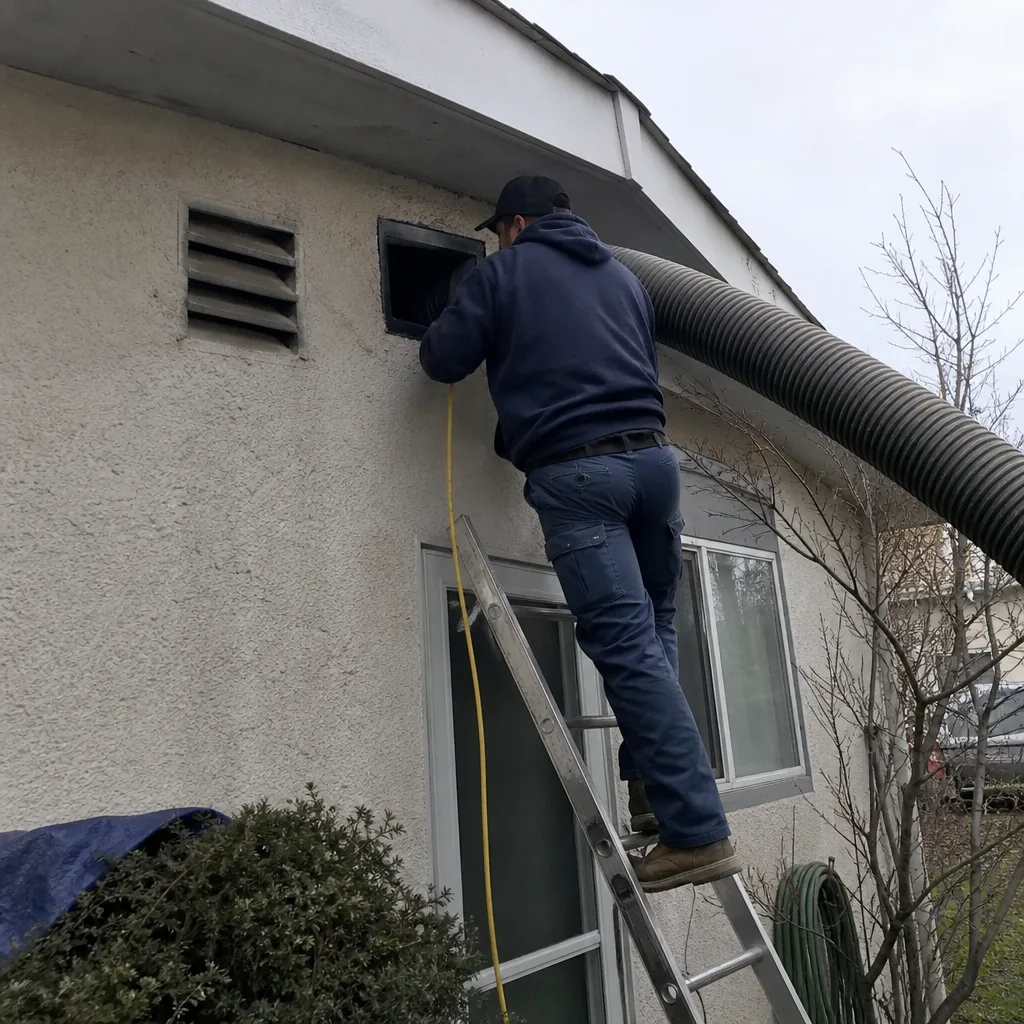 Before
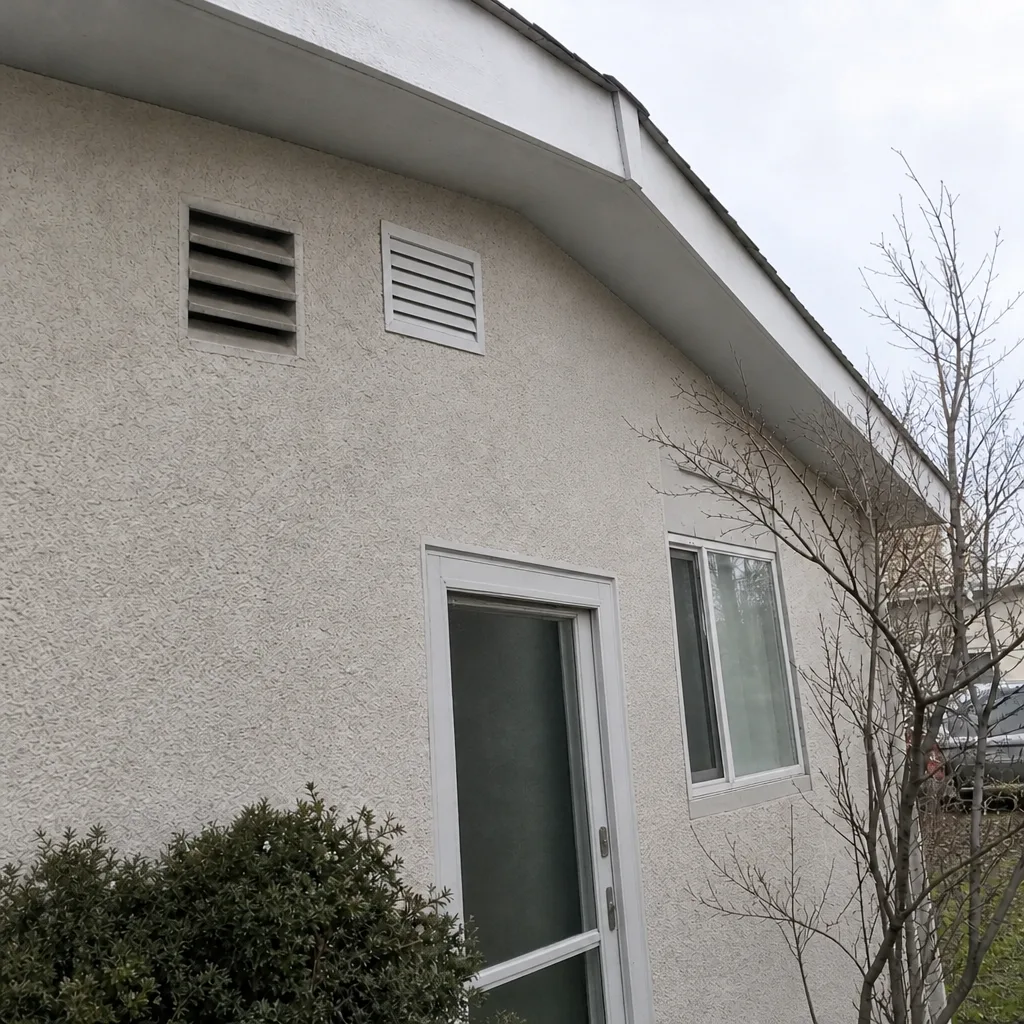 After
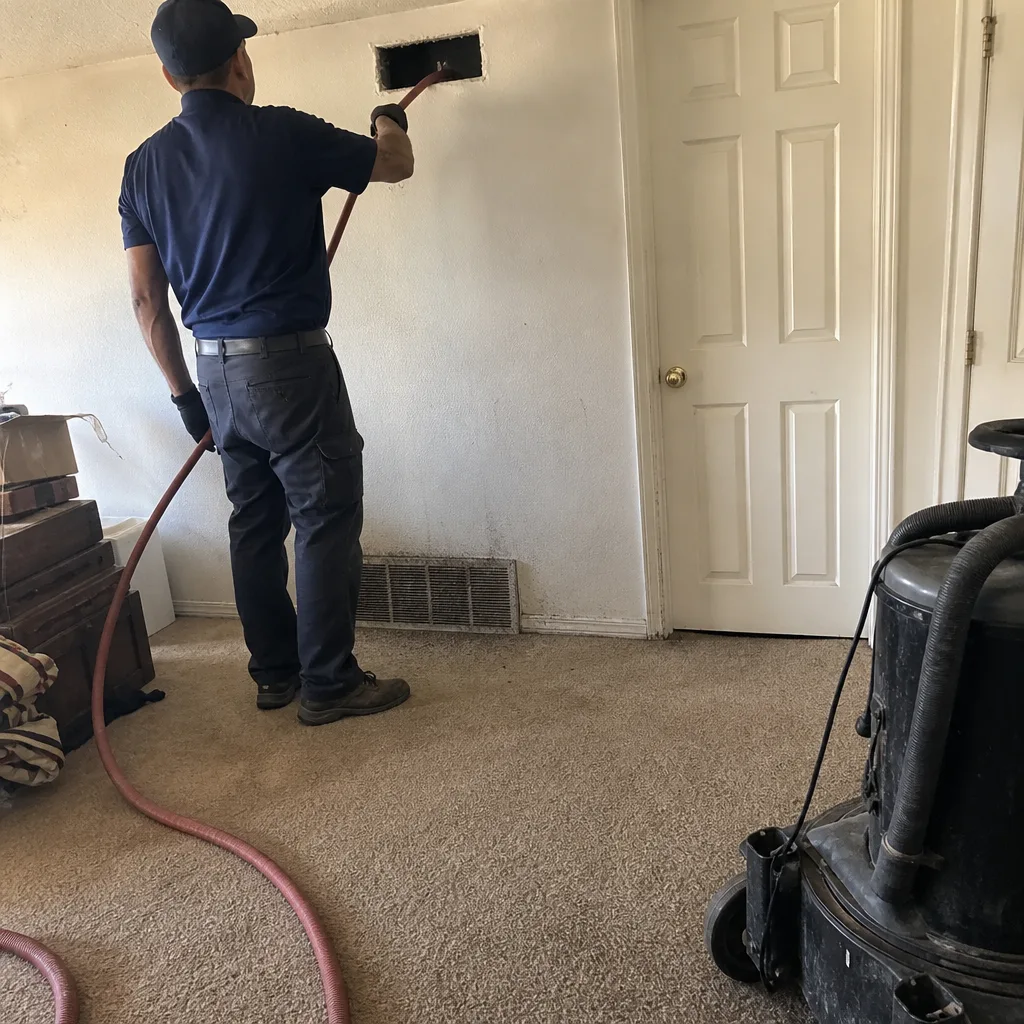 Before
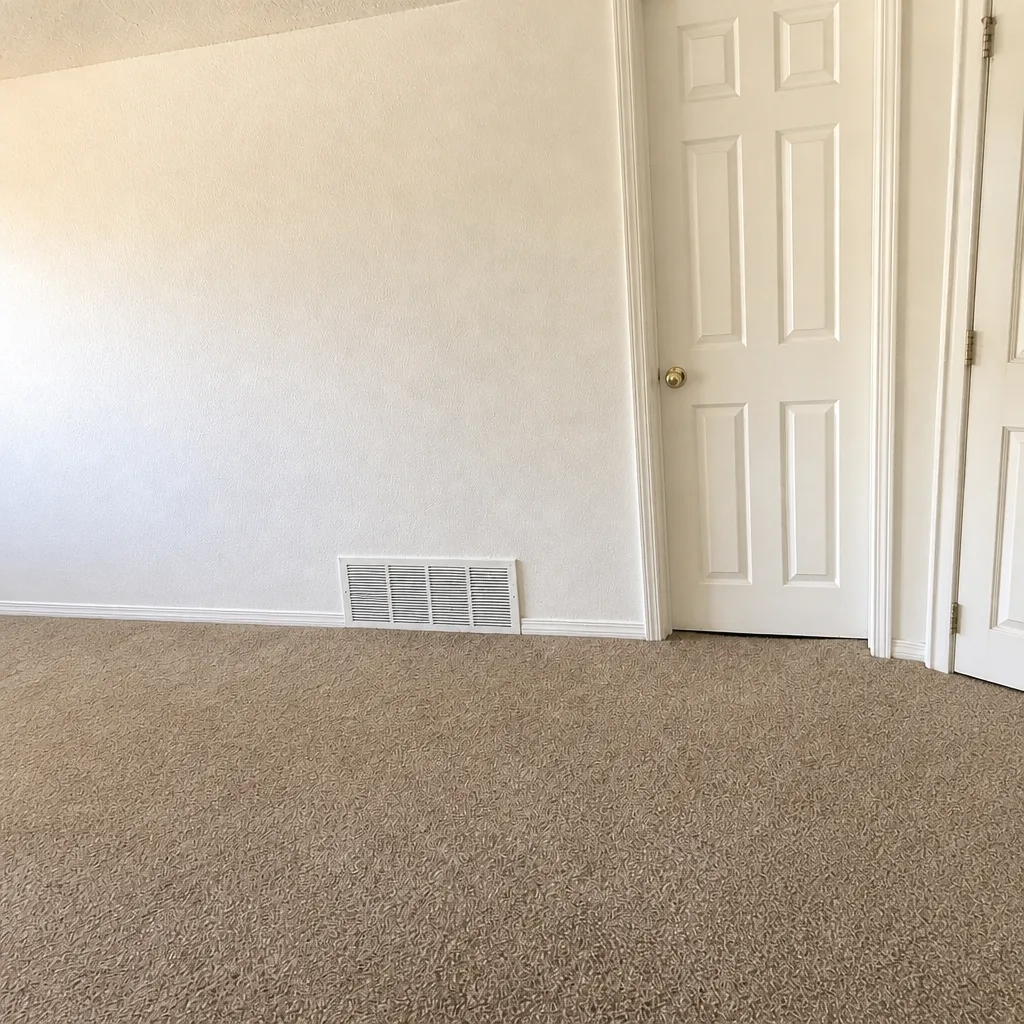 After
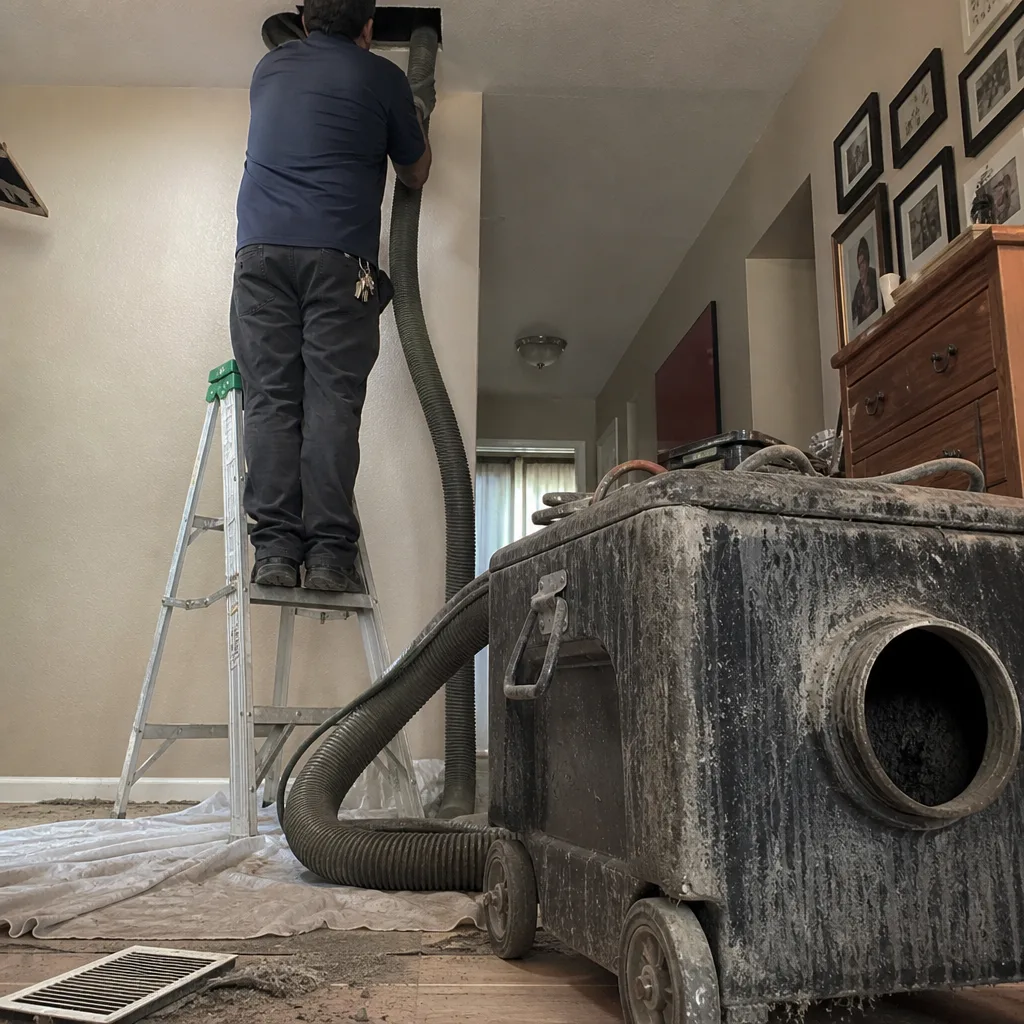 Before
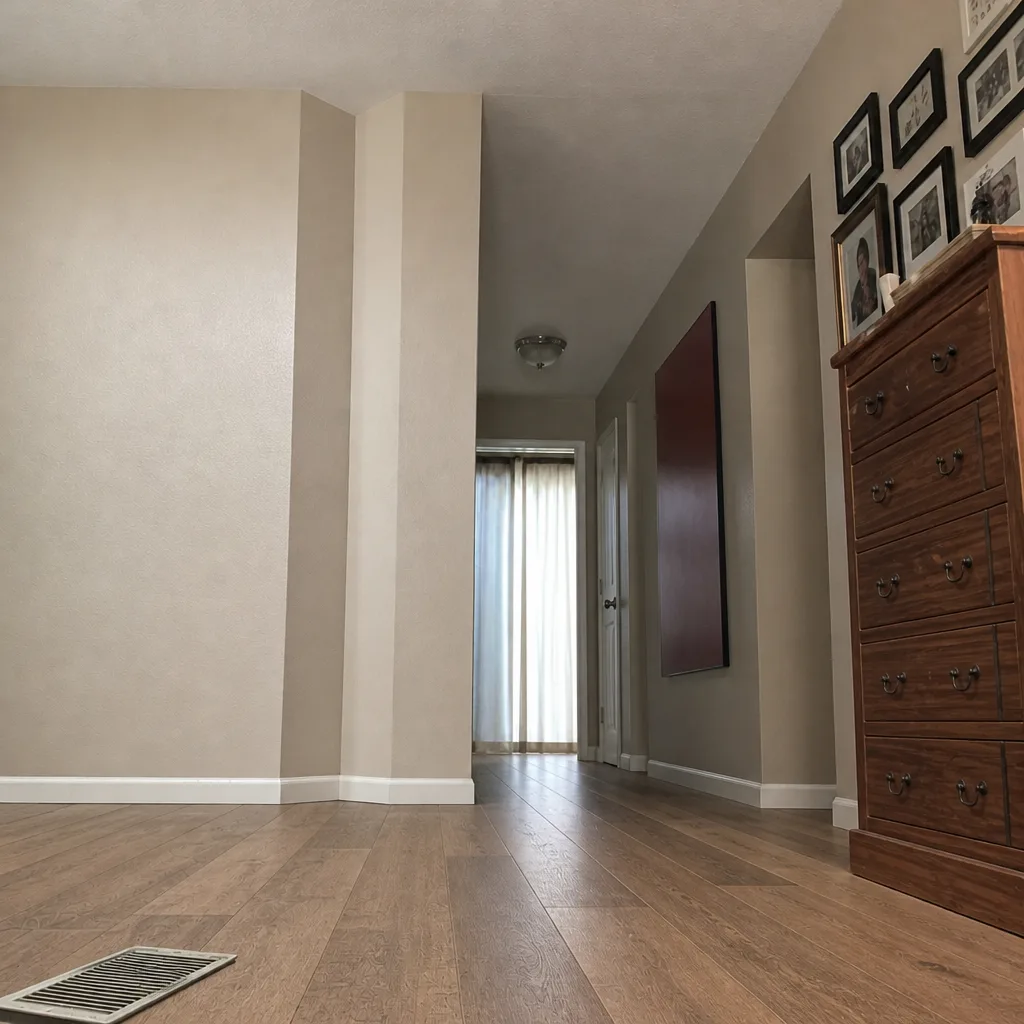 After
When to Call a Professional
Call when the symptoms are specific and persistent: dust reappearing on surfaces within days of cleaning them, a musty smell when the system cycles, rooms that never seem to reach the set temperature, or a dryer that consistently needs two cycles to finish a load. Call after renovation work near or in the home, after a wildfire smoke season, or when someone in the house develops unexplained allergy symptoms that improve away from home. And call if you’ve never had the ducts inspected – in Gilroy, homes over 5 years old with original ducts almost always carry a load worth seeing on camera. Duct Cleaning Gilroy offers free estimates in Gilroy – call (833) 589-9833. We answer 24/7. Fast dispatch from 7am to 7pm, Sunday through Friday.
Frequently Asked Questions
A full-system cleaning in Gilroy typically ranges from $450 to $800 for most single-family homes, with smaller condos starting around $350 and heavily contaminated or post-renovation systems running $700 to $950. The price is set by written estimate after a camera inspection, not by a per-vent multiplier that grows once the crew arrives. Call (833) 589-9833 for an exact quote – the estimate is free.
Cheaper quotes are for a different job: a portable vacuum run through each register that removes loose dust from the first few feet of duct but leaves the trunk line and branch runs untouched. A full source-removal cleaning with a rotary brush and HEPA negative-air containment takes hours and costs more because it actually removes the contamination. If the price seems too good, ask exactly what gets cleaned and how they’ll prove it.
You should see a camera inspection of your ducts before the job, with the contamination visible on screen, and you should receive timestamped before-and-after photos that show identifiable features of your own ductwork. A HEPA vacuum should be running for the entire job, and a rotary brush should be used in every accessible run. If any of those are missing, the job wasn’t done to source-removal standard.
Yes, and it’s measurable. The particulate coming off the farmland around Gilroy is finer than typical household dust, which means it packs into surfaces and resists airflow-only removal. Combined with wildfire smoke residue, which creates a slightly tacky film on duct walls, the contamination in Gilroy systems is often more compacted and harder to clean than in coastal or urban Bay Area homes. That’s why contact agitation matters here specifically.
Every 3 to 5 years for most homes, with 3 years being the safer baseline in Gilroy given the agricultural and smoke load. Homes with pets, allergies, recent renovations, or wildfire smoke exposure should lean shorter. The most accurate answer comes from a camera inspection – if the camera shows packed debris, the cleaning is due regardless of elapsed time.
No. The dryer vent is a separate run from the HVAC duct system and requires its own cleaning with its own process. A dryer vent cleaning should include brushing the full length, clearing the exterior termination, and measuring airflow at the exhaust to confirm the vent is actually moving air. Given the fire risk of a restricted dryer vent, this is not a service to skip. Call (833) 589-9833 – we answer 24/7 and dispatch from 7am to 7pm, Sunday through Friday.
The Bottom Line
Duct cleaning in Gilroy isn’t the same job it is in San Jose or Campbell. The agricultural particulate, the wildfire smoke film, and the hard-water coil scale all change what a cleaning needs to accomplish. The right process starts with a camera, uses mechanical contact cleaning and HEPA containment, and ends with documentation you can verify. The wrong process is fast, cheap, and invisible. Knowing the difference puts you in control of the transaction. When you’re ready to see what’s actually in your ducts, the estimate is free and the evidence comes with it. Call (833) 589-9833.
Written by the team at Duct Cleaning Gilroy, serving Gilroy since 2011.